Stress reduction is one of the most consistent benefits of wellness practices, yet many tools create friction that works against that goal. Participants described meaningful improvements—feeling calmer, more focused, and better able to manage anxiety—when interactions felt natural and unobtrusive. Sorenson Wellness was designed to remove those barriers, delivering a faster, more supportive experience. The product moved from ideation to launch in under three months.
8 of 10 Users would recommend
Would recommend mental health surveys to close family and friends
95% in Success Rate
Reported no issues, resulting in a smooth frictionless flow
58% in boost in satisfaction
As users felt more empowered using a more modernized product
THE PROBLEM
THE TEAM
I led early discovery then expanded the team
I joined an early-stage product team charged with exploring new opportunities for the business. The initiative began with two contributors and grew into a full cross-functional group with a product manager, two developers, a researcher, and myself leading design.
Hypothesis
By analyzing voice during journaling, users gain insights that increase engagement and support emotional well-being.
RESEARCH
Mapping Opportunities in Wellness Practices
We examined participants’ general wellness habits to understand how often they engage, what challenges they face, and which tools they currently rely on. The survey included 95 participants and focused on identifying patterns in engagement, unmet needs, and opportunity areas within existing wellness solutions.
0%
0%
Engage in wellness practices at least once per week
Most participants practice wellness regularly, showing a consistent need for tools that support and reinforce these behaviors.
0%
0%
Cite stress and anxiety management as their primary need
The majority use wellness practices to manage stress, anxiety, or maintain emotional balance, highlighting mental well-being as key.
0%
0%
Do not use any wellness apps
Almost all participants use some wellness tool, suggesting opportunity lies in offering a more integrated, effective solution.
Revealing Persistent Barriers
These two challenges kept coming up in participant habit data and survey responses. They weren’t just minor inconveniences; they actively blocked a fluid, consistent state of well-being. Addressing them became key to building a better solution.
64%
Daily stress blocked consistent, effective wellness practices.
15%
DESIGN
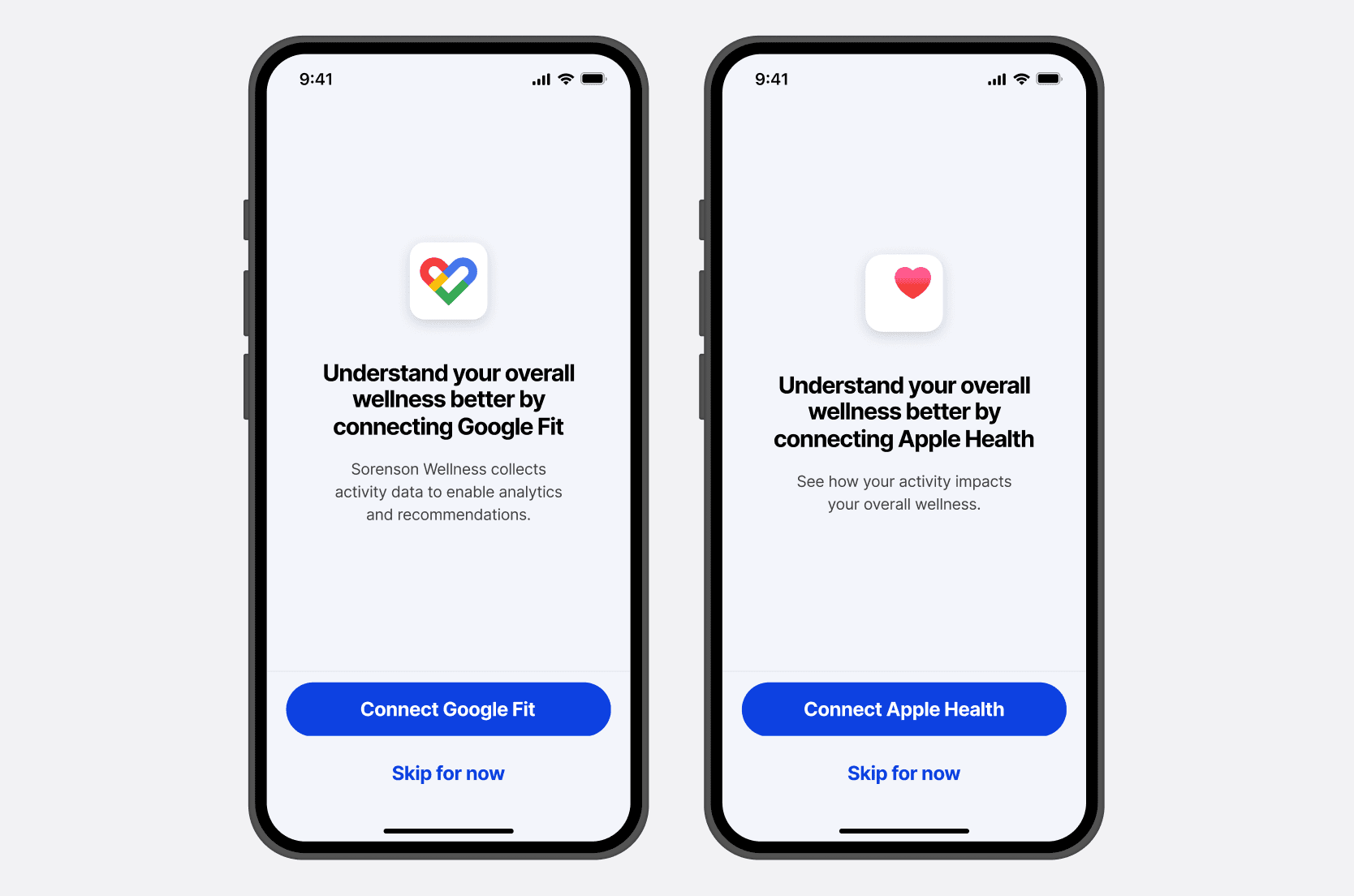
I designed the layout to surface only what mattered most—clearly showing how each permission strengthens the wellness experience. By prioritizing Apple Health and Google Health, users could immediately see the value of integrating their existing tracking data.
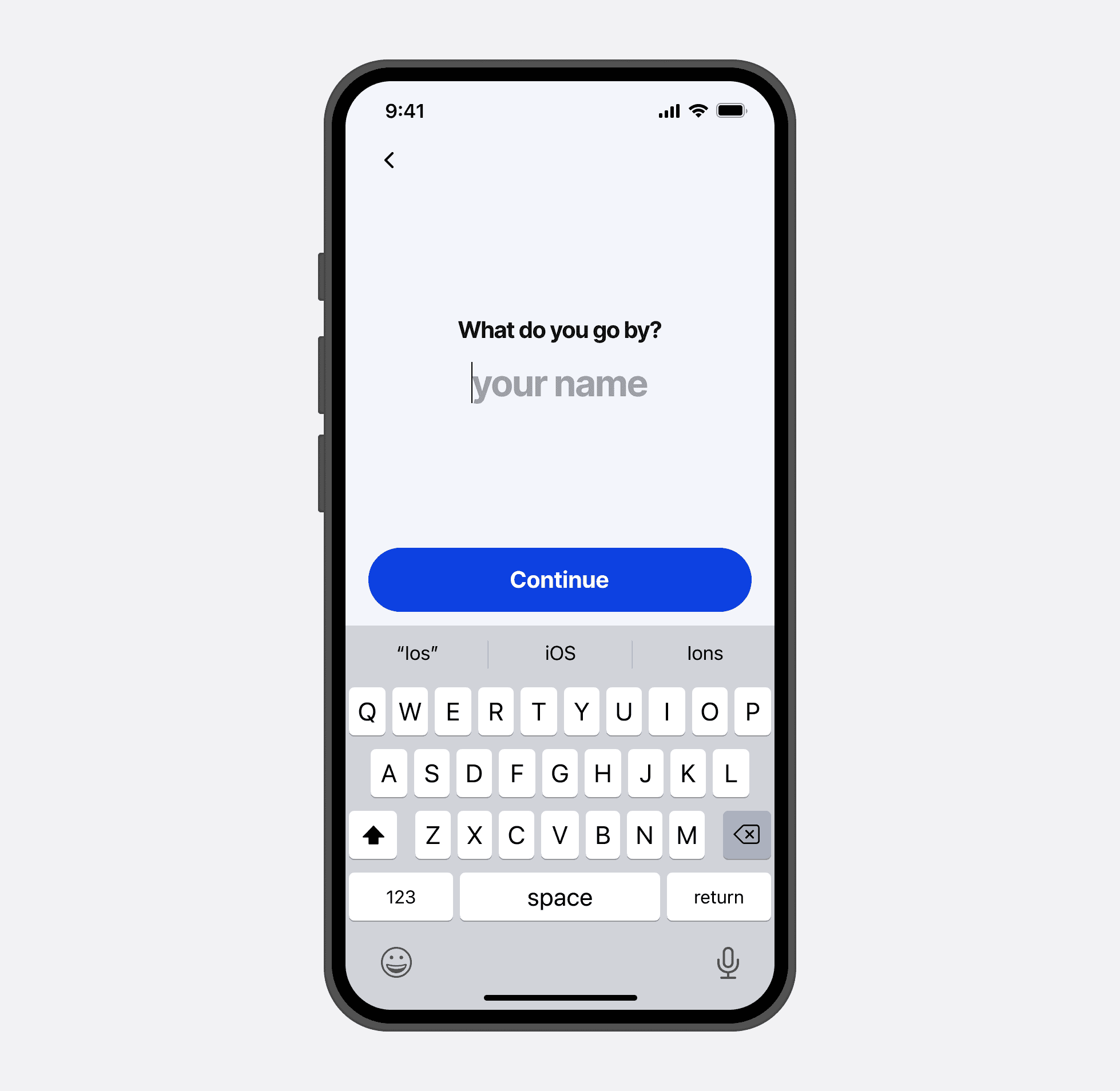
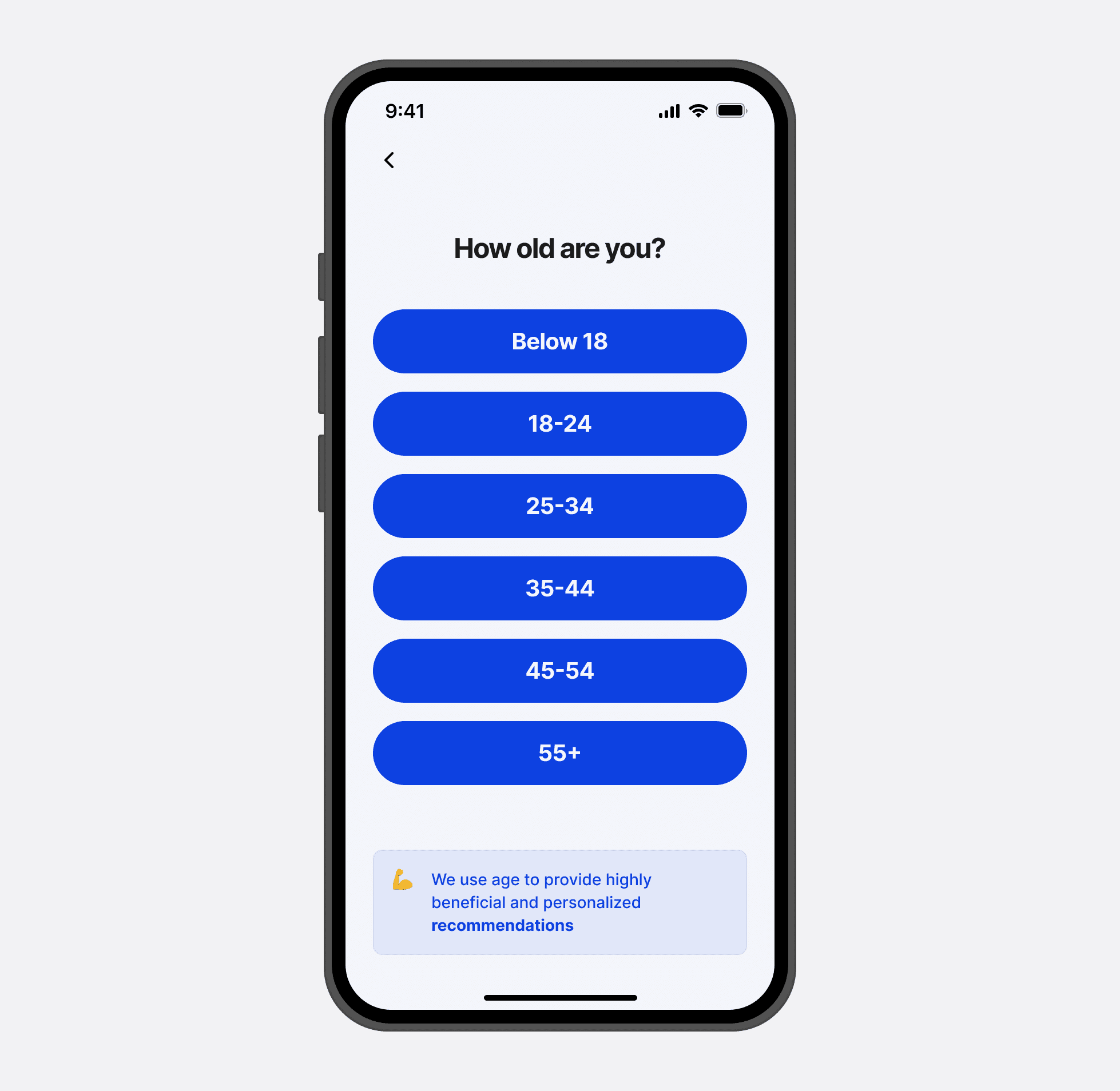
Including name and age in onboarding ensured AI recommendations were age-appropriate and personalized from the first voice check-in
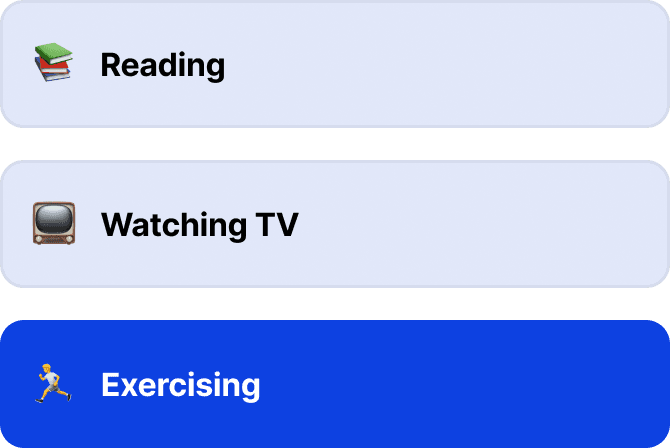
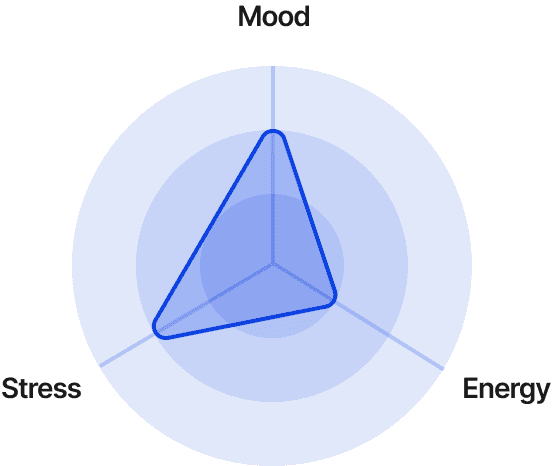
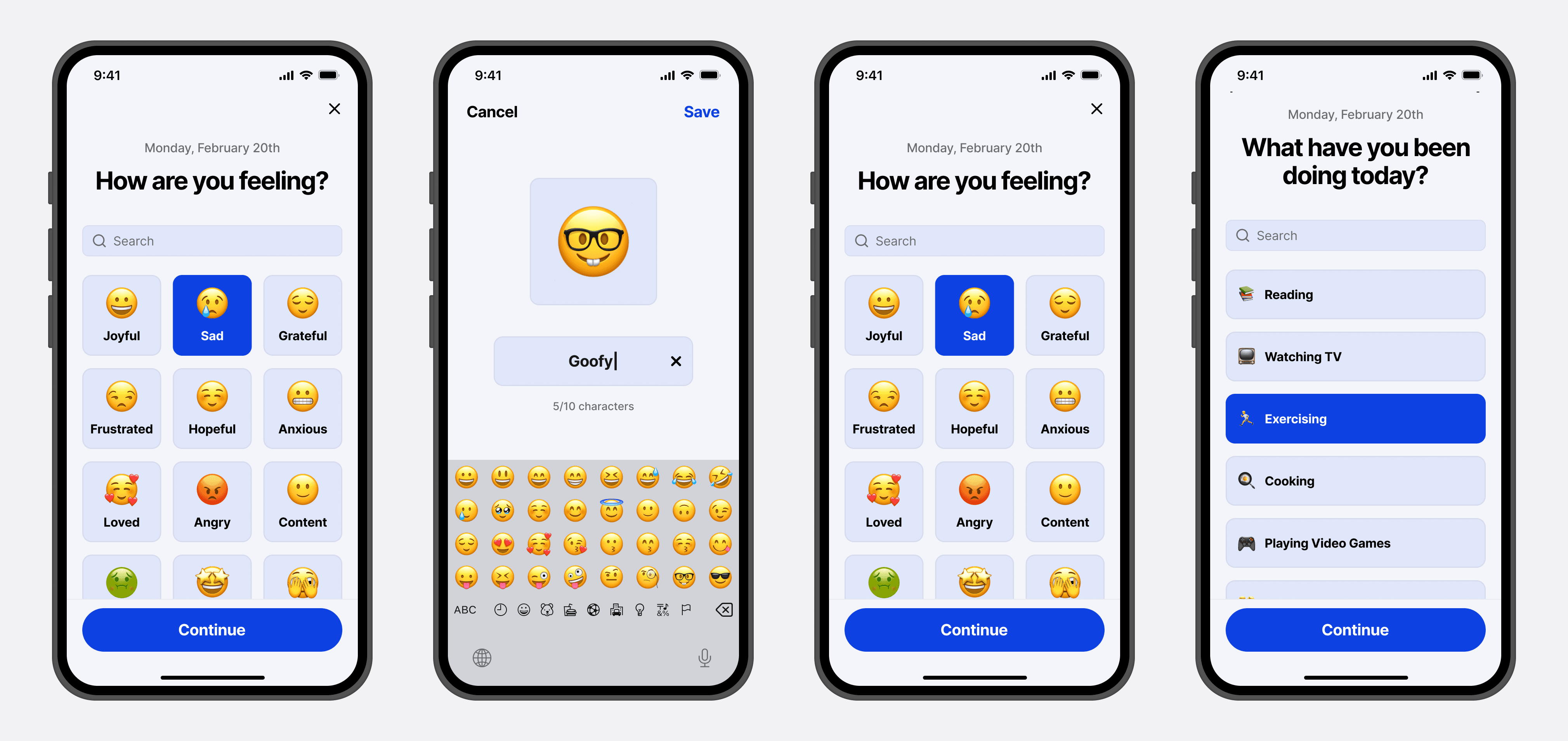
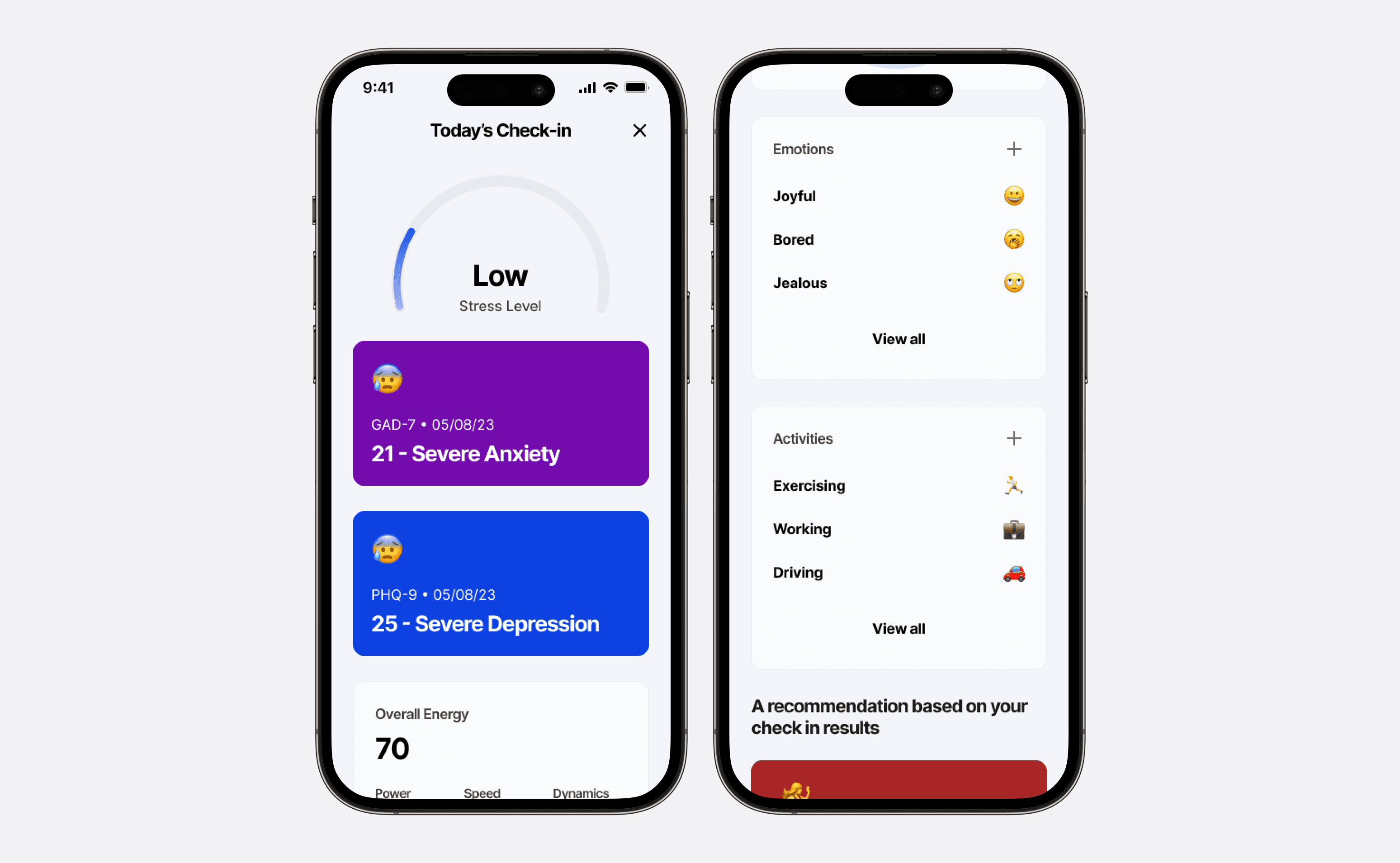
The product differentiated itself by turning AI voice analysis into clear stress and energy metrics. Voice check-ins unified daily activity logging with immediate emotional state feedback in a single, low-friction flow
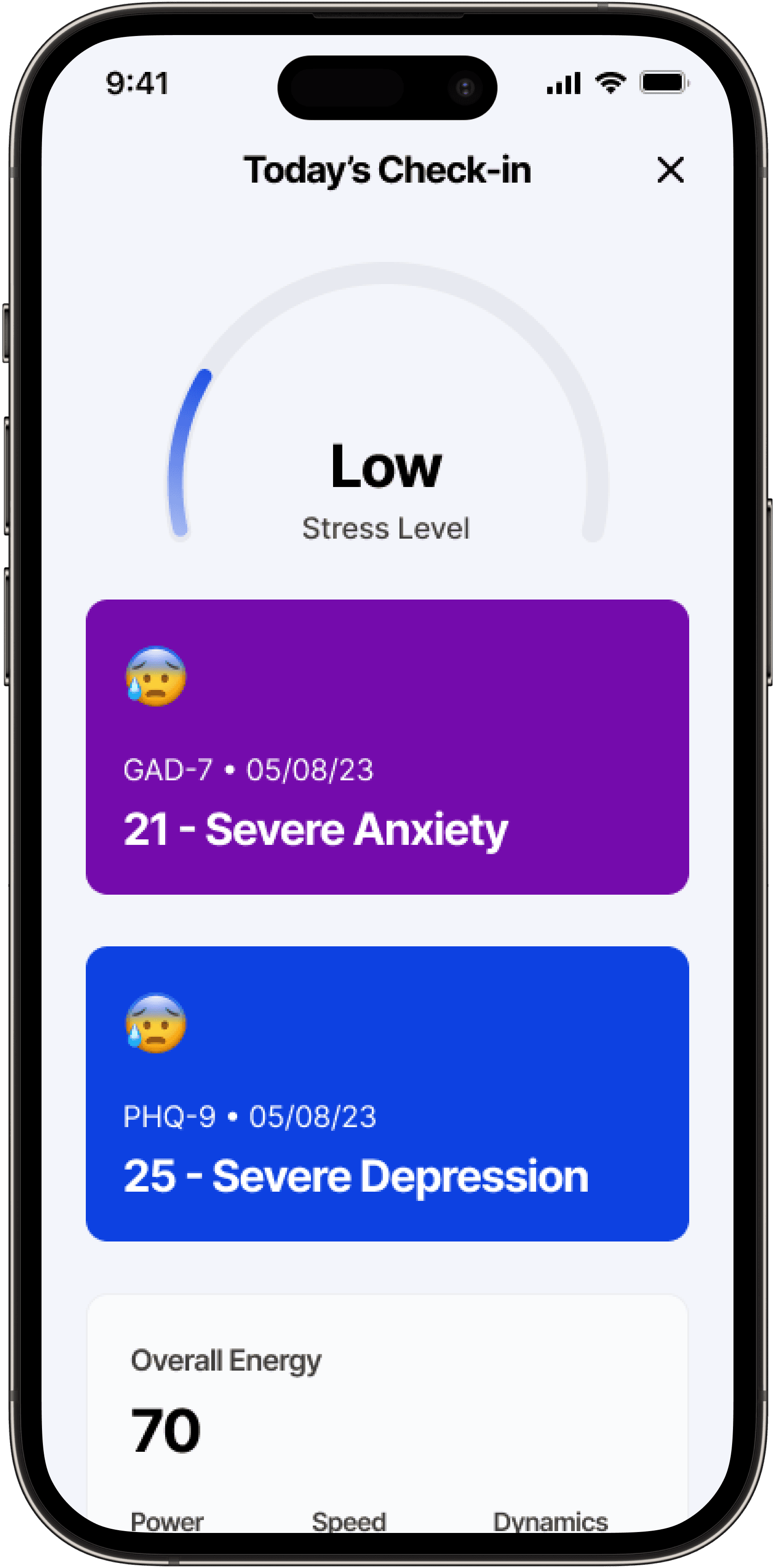
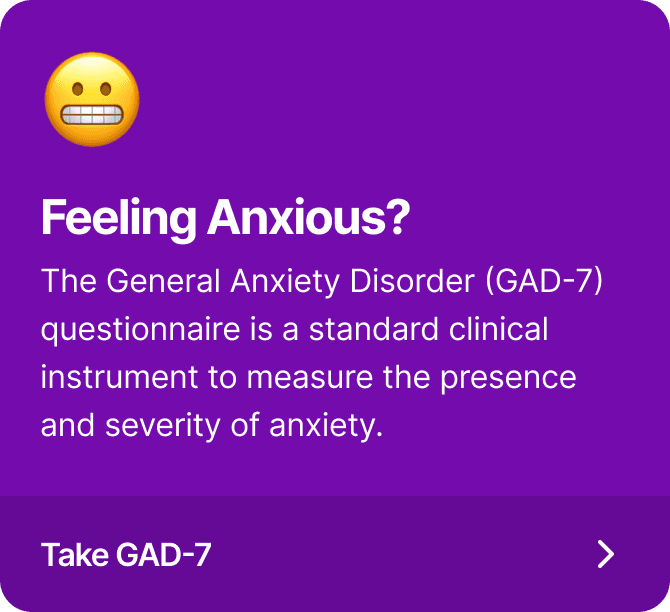
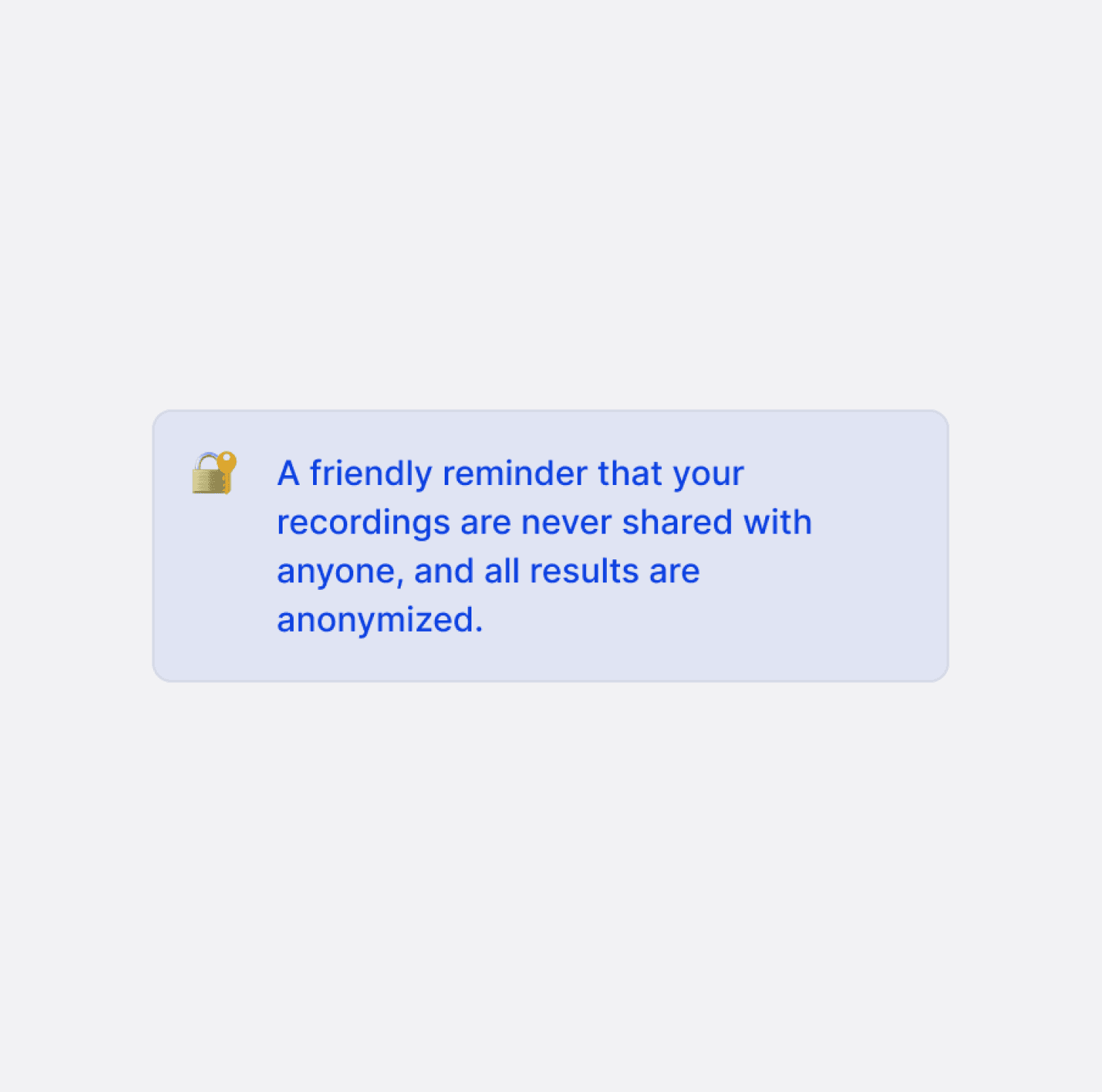
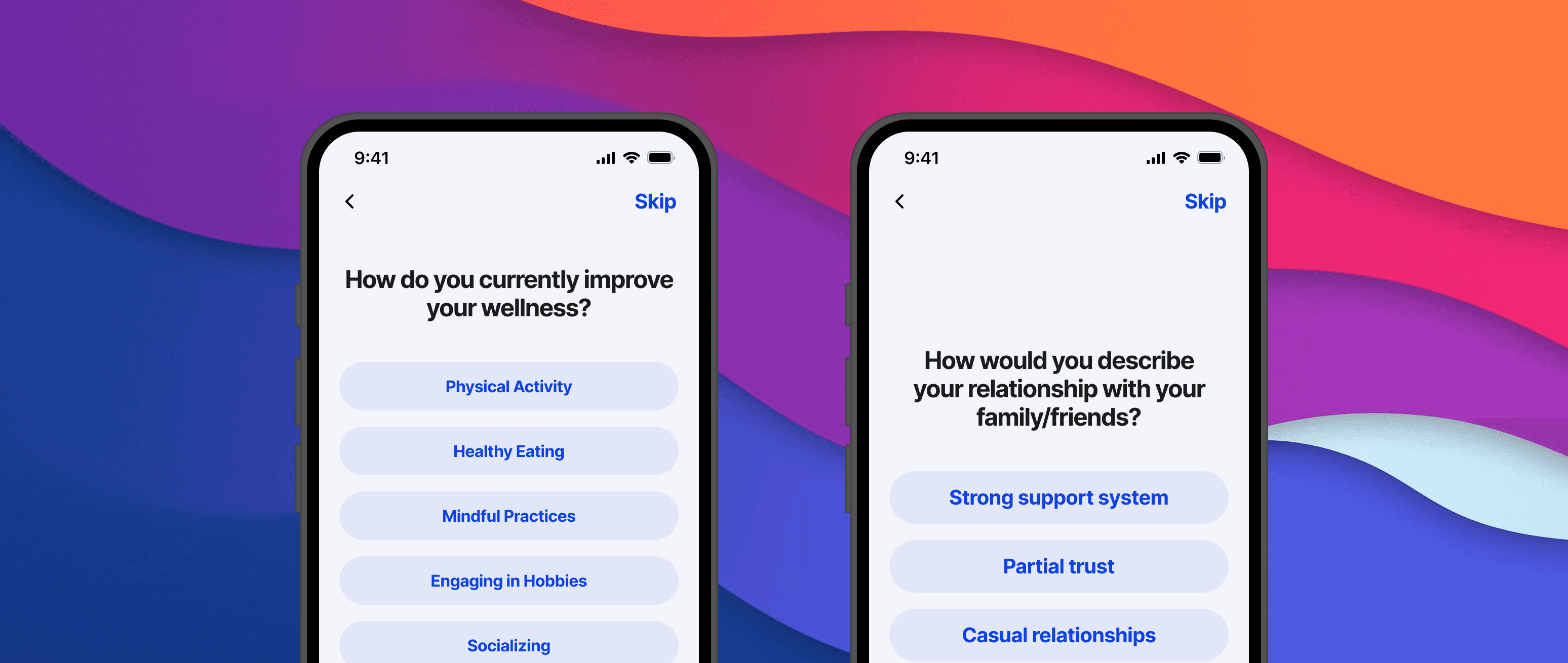
Before voice journaling, users complete a brief, clinically validated GAD-7 and PHQ-9 assessment to establish a mental health baseline. This baseline then informs and contextualizes the biometric insights captured during subsequent voice check-ins.
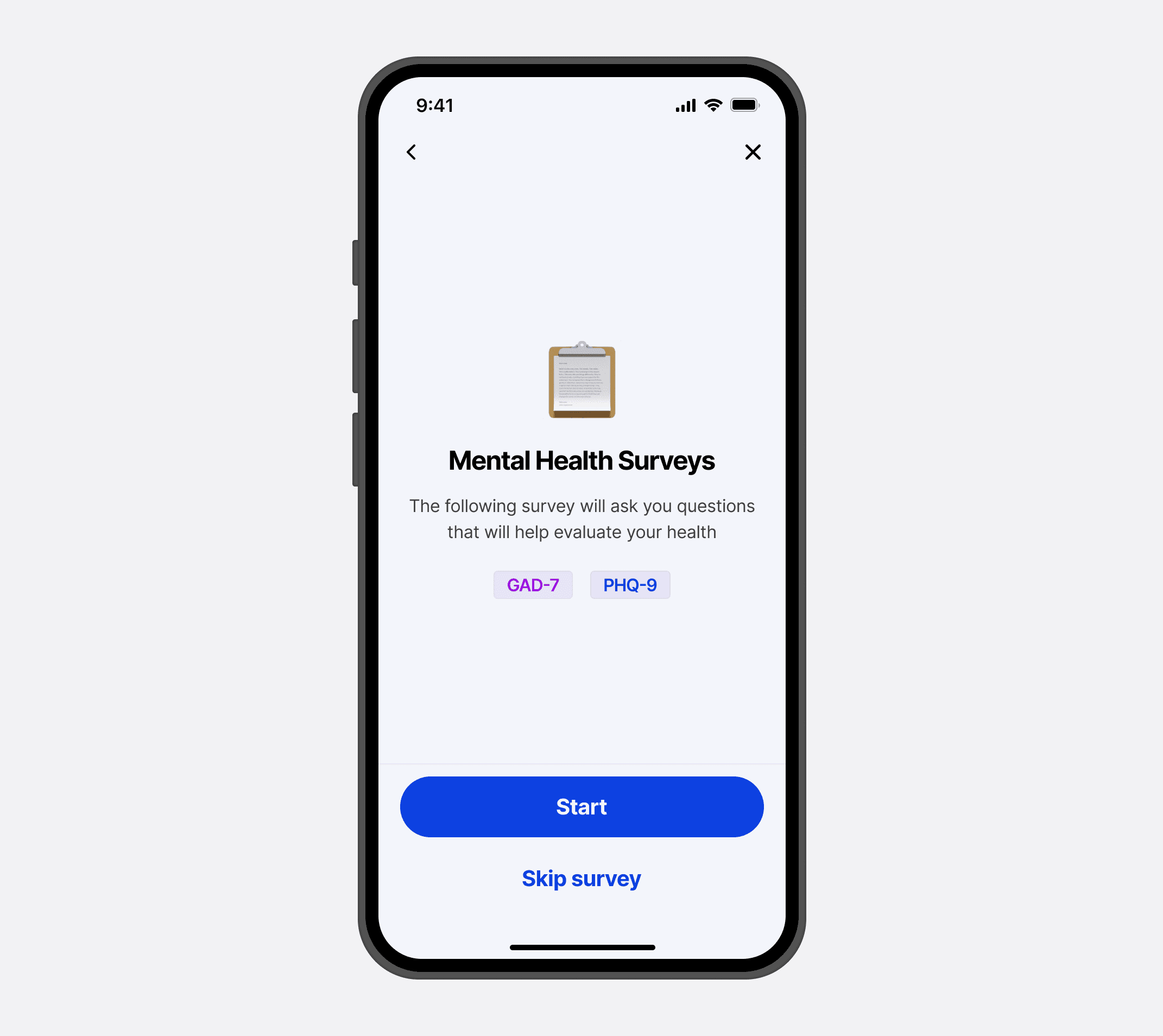
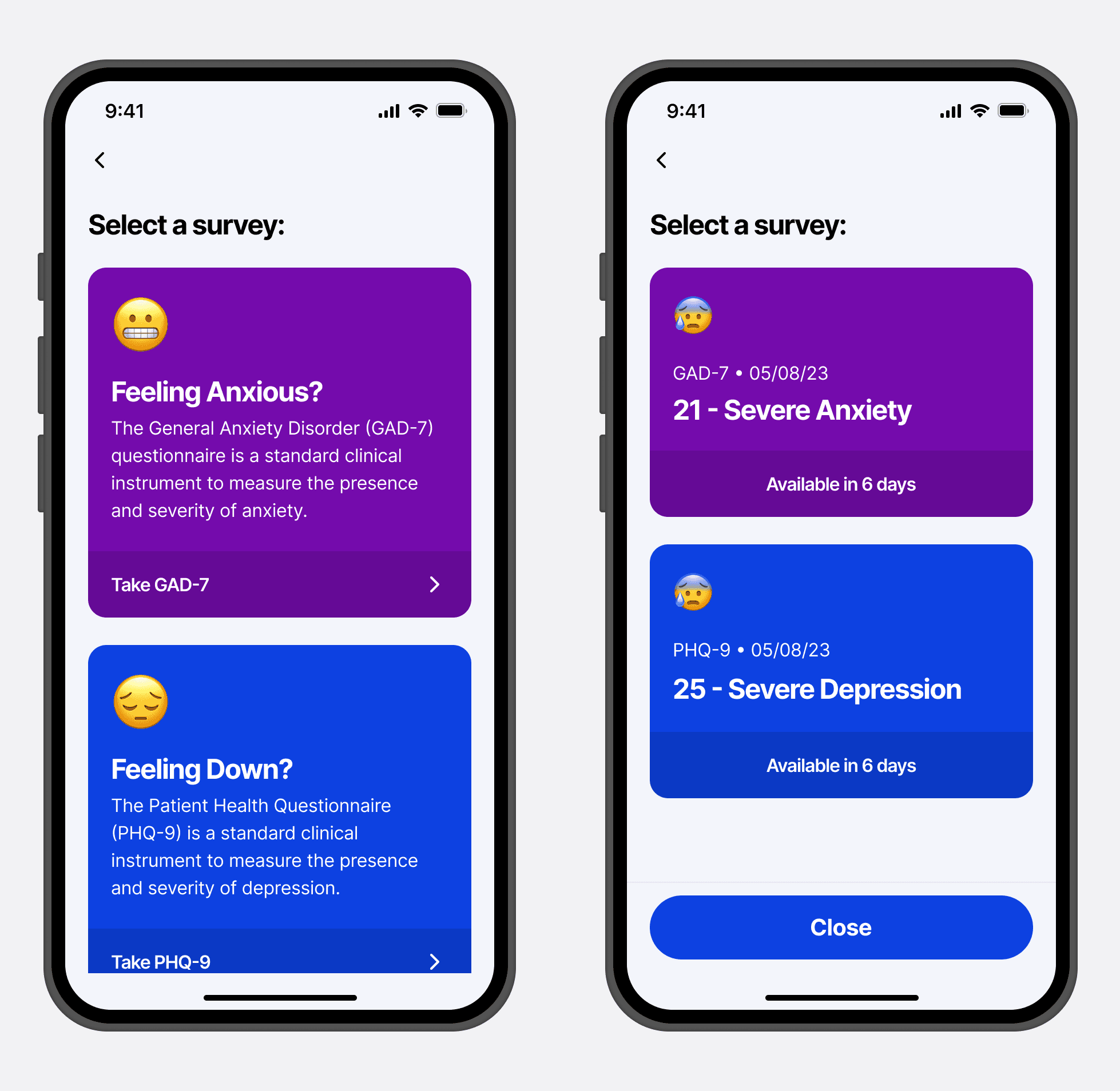
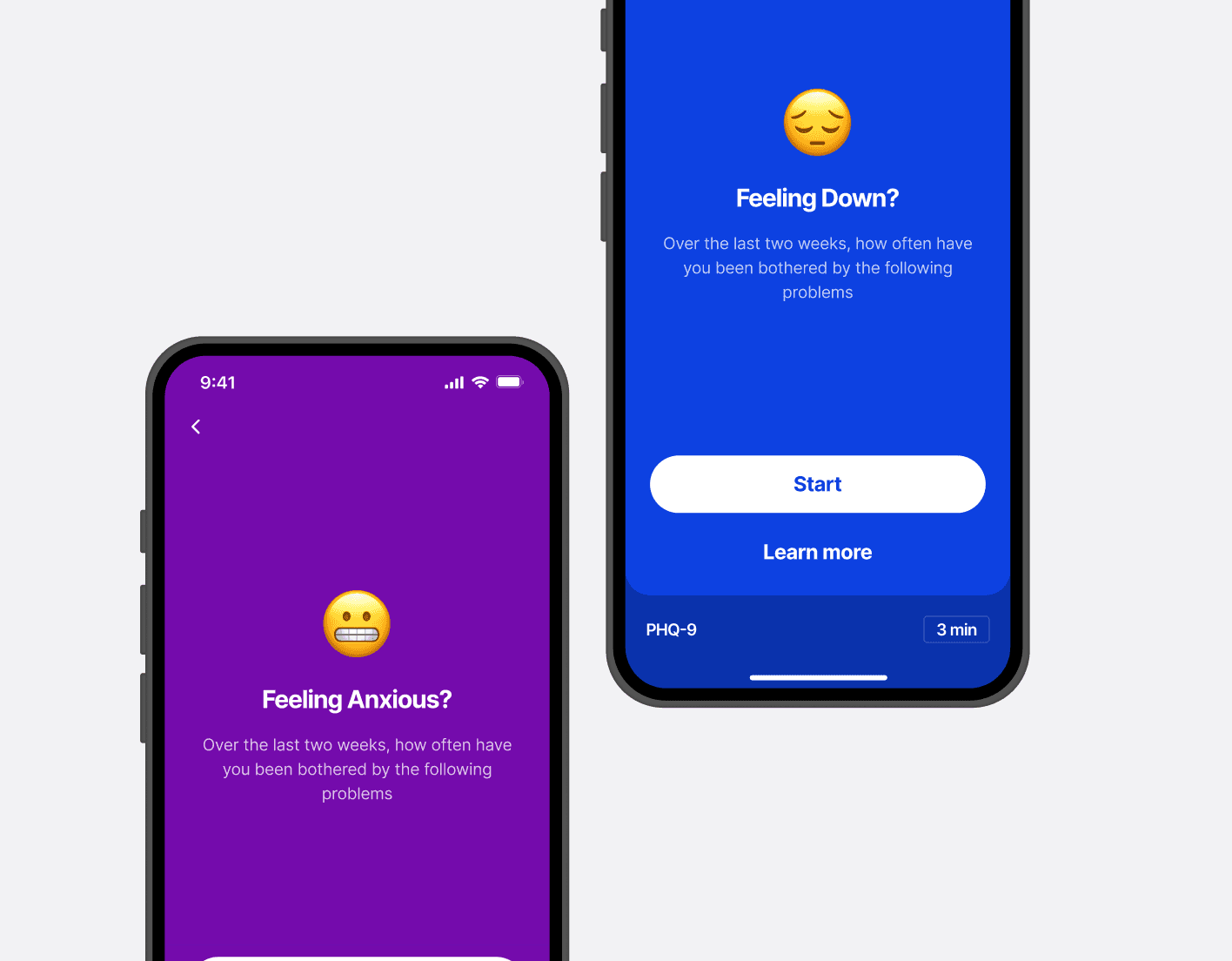
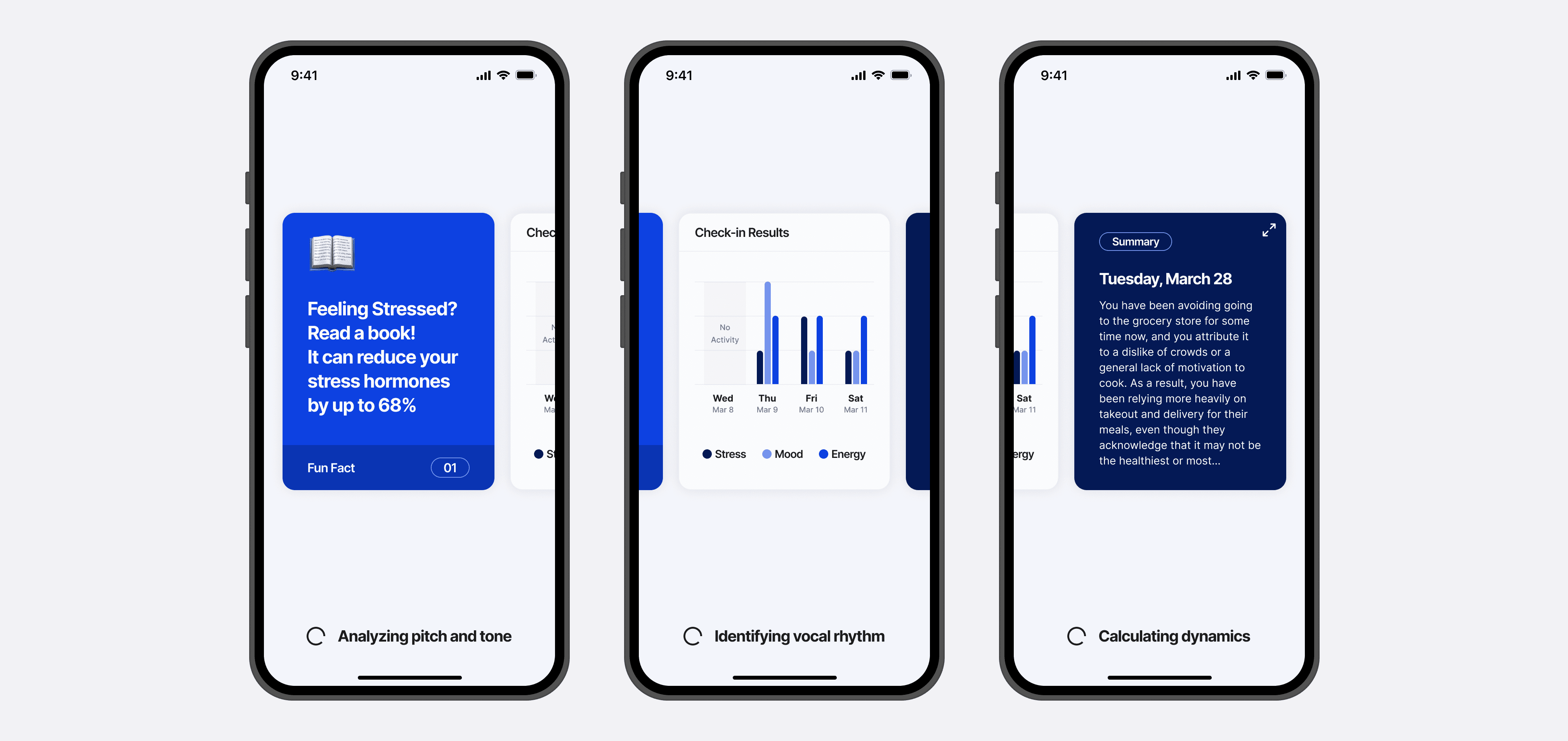
The voice journaling feature was designed to translate natural speech into measurable stress and energy insights. By analyzing vocal patterns during short, guided reflections, the system provides users with immediate, personalized biometric feedback

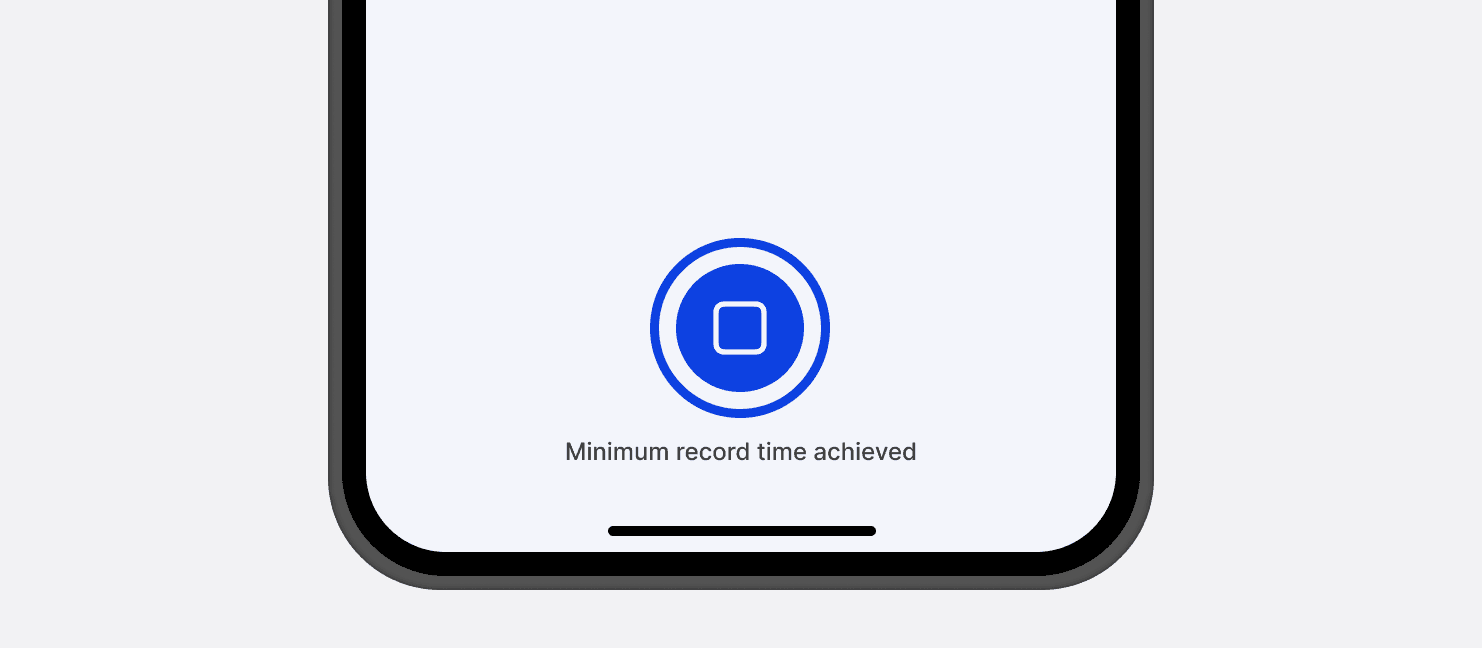
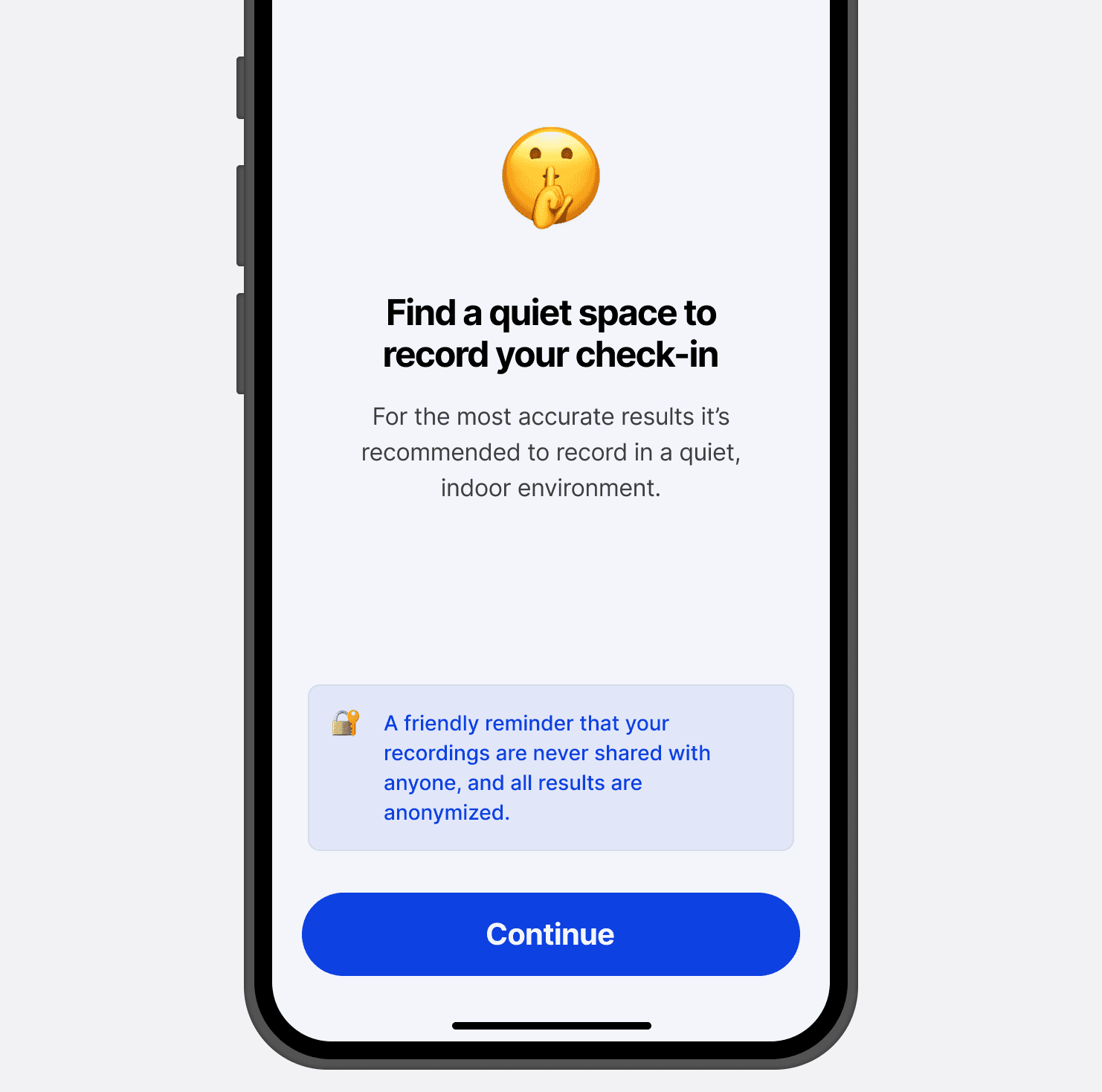
A key constraint was the need for at least 40 seconds of recorded audio to generate reliable biometric insights. While a shorter duration was ideal, this threshold ensured accuracy, so we supported users with guided prompts to make the voice-journaling experience feel natural and effortless.
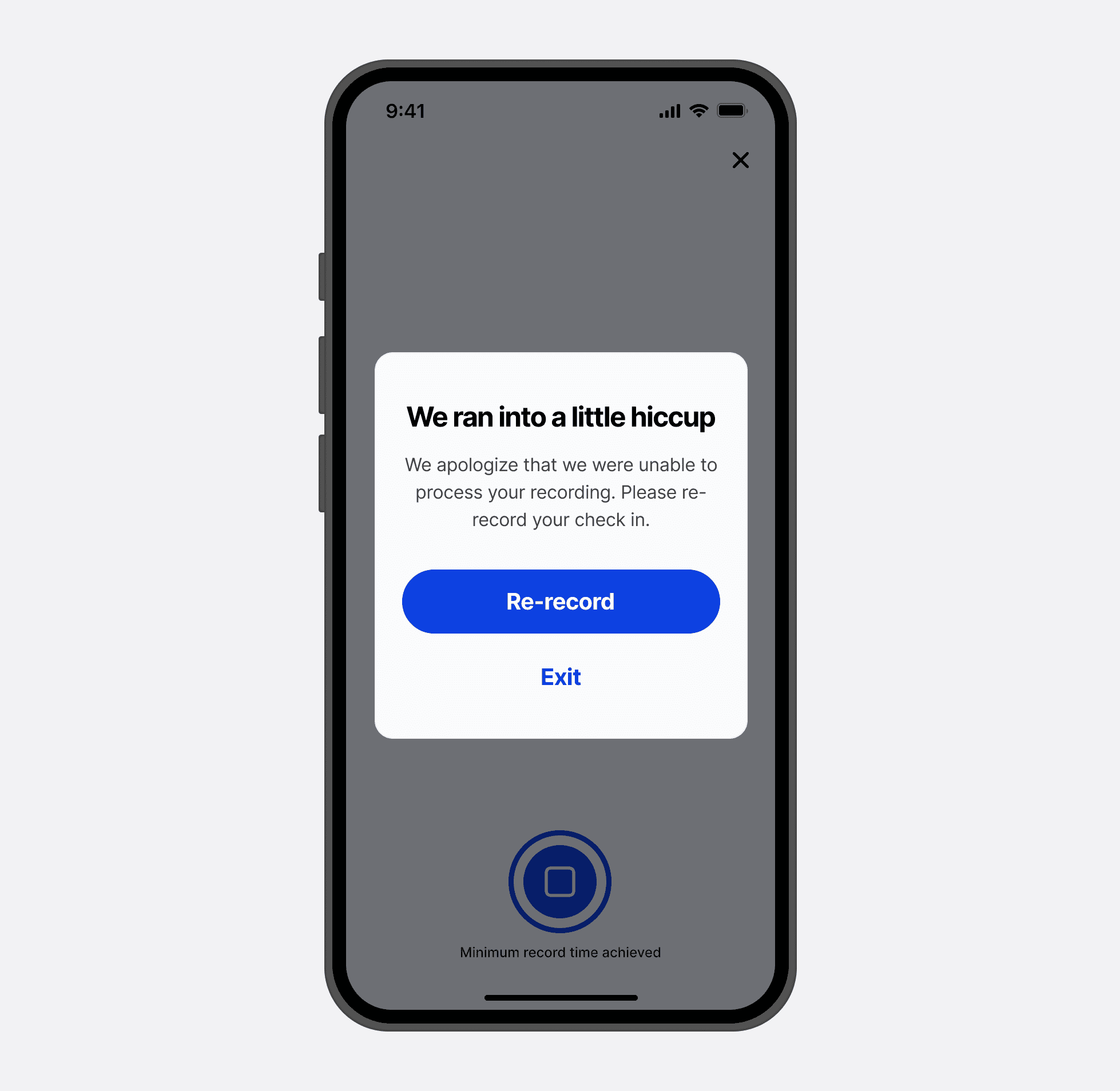
Following the assessment period, voice analysis activates to capture biometric signals during check-ins, creating a snapshot of daily activity, emotional state, and historical journal patterns that inform personalized recommendations.
Users wanted a clear, consolidated view of their wellness, so the results screen surfaces key insights—energy and stress levels alongside logged activities—helping them understand patterns and progress over time.
TESTING
91% of testers found the onboarding setup easy, but clarity on technology lagged behind.
High Ease of Use
Strong Overall Satisfaction
Clarity Gap
Only 76% understood voice analysis; users felt explanation rushed or vague, making this the main friction in onboarding.
Improving Clarity Through Testing
Interpreter feedback led to refinements that improved clarity, speed, and confidence across the experience:
Validating Updates
After refining onboarding based on feedback, we reintroduced the updated prototype to confirm improvements and validate the concept. Key findings included:
High Ease of Use
Intuitive Customization
Immediate Value
RESULTS
Echoes of Sorenson Wellness
A month in, the company restructured. The Incubation team was dissolved, and my three-month contract ended. Sorenson Wellness had real potential, and even after development paused, I kept advocating for it.
8 of 10 Users would recommend
Would recommend mental health surveys to close family and friends
95% in Success Rate
Reported no issues, resulting in a smooth frictionless flow
58% in boost in satisfaction
As users felt more empowered using a more modernized product
REFLECTION
What started as a simple observation grew into Sorenson Wellness, a complete product experience.
If I could do it all over again, I’d push harder to align stakeholders on its value. Sorenson Wellness demonstrated the power of solving real user needs, and a stronger business case might have helped keep it alive. Even though development ended early, Sorenson Wellness made an impact. Its influence continues, and I hope that one day it—or something like it—will reach the users who need it most.